Overview
The Fischer Ranger — sold with no number after the name — is the entry point to Fischer's Ranger freeride family. It is not the same ski as the Fischer Ranger 84 or the Fischer Ranger 90: those two carry titanal, while this one is a metal-free poplar and fibreglass build that Fischer aims at beginners through advanced skiers taking their first steps off the groomers. Unusually, the waist grows with length, from 86 mm in the 142 cm to 94 mm in the 182 cm, so every size is effectively its own width. Fischer sums it up as "easy and effortless in every condition".
On-snow performance
On paper this is a forgiving, low-speed all-mountain freeride ski. The Freeski Rocker profile lifts tip and tail, which the shape suggests makes the ski easy to pivot and quick to release, while camber underfoot keeps some grip on the groomers. The radii are short for the category — 10 m in the 142 cm, 15 m in the 172 cm and 16.5 m in the 182 cm — so the Ranger favours short to medium turns over long, fast arcs. Fischer's own product finder places it at slow speeds with a medium turn radius and calls it lively and playful. Without a titanal layer it will have a lower speed ceiling and less damping in chopped snow than the metal Rangers, but it is also light: 1650 g per ski in 162 cm and 1800 g in 172 cm.
Construction & specs explained
- Core: Poplar Woodcore.
- Reinforcement: Fiber Tech fibreglass laminates — no titanal layer.
- Sidewall: Sandwich Sidewall Construction for direct edge control.
- Profile: Freeski Rocker (rocker / camber / rocker).
- Base and tune: sintered base, 87° side edge and 1.2° base bevel from the factory.
- Per-length specs: 142 cm (124/86/112, 10 m, 1400 g), 152 cm (126/88/114, 12 m, 1500 g), 162 cm (128/90/116, 13 m, 1650 g), 172 cm (128/92/117, 15 m, 1800 g), 182 cm (134/94/121, 16.5 m, 1950 g).
- Sold as a flat ski or as a package with the Attack LYT 11 GW binding.
Who it's for & comparisons
The Ranger suits progressing intermediates and lighter advanced skiers who spend most days on piste but want a ski that does not fight them when they dip into soft snow beside the run. Within Fischer, the Fischer Ranger 90 is the step up: a fixed ~90 mm waist with a Shaped Ti 0.5 layer for more grip and stability at speed. The Fischer Ranger 84 is narrower and Ti-reinforced, aimed at a more piste-focused skier. From other brands, the Atomic Maverick 86 c is a similarly approachable mid-80s all-mountain ski without a full metal sheet, and the Dynastar M menace 90 is an easy-going 90 mm freeride ski for the same progressing skier.
Pros, cons and verdict
Pros
- Very approachable flex and Freeski Rocker for easy turn entry.
- Waist scales with length, so shorter skiers get a narrower, quicker ski.
- Light for the category: 1400–1950 g per ski across five sizes.
- Short radii keep it nimble in bumps and trees.
Cons
- No titanal: lower speed ceiling and less damping in crud than the Ranger 90.
- Short sidecut radii feel busy on long, fast groomer arcs.
- Strong or heavy skiers will outgrow it quickly.
- At 86–94 mm it is a mixed-conditions ski, not a deep-powder tool.
Verdict: The no-number Ranger is Fischer's gentle doorway into freeride — a light, metal-free all-mountain ski for skiers learning to leave the groomers, and a clear step below the titanal Ranger 84 and Ranger 90.
The neighbourhood
its nearest skis on the map, by character — not by brandQuestions & opinions
User reviews
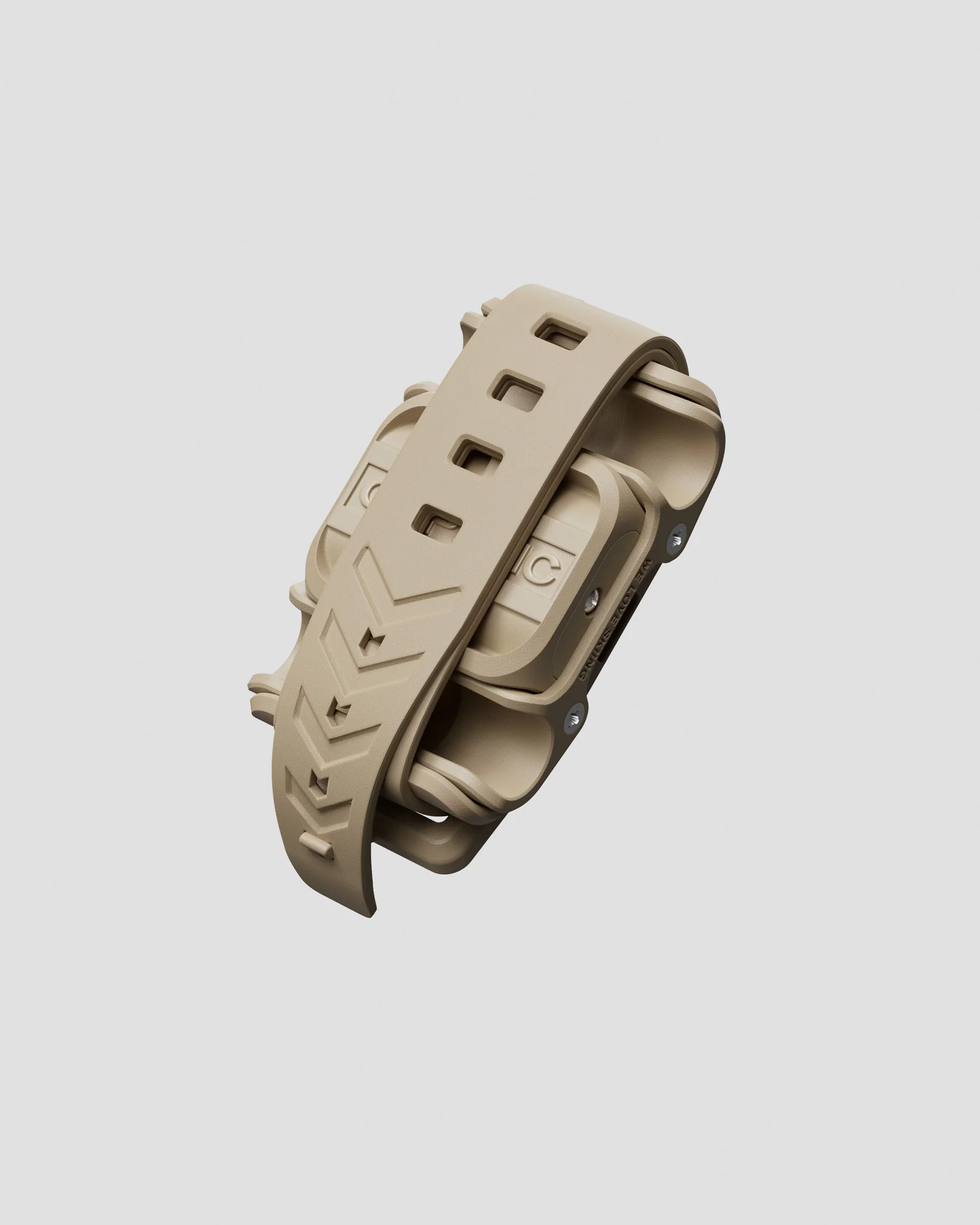
Missing a hand while carrying ski gear?
A friend of mine created Clipstic, the easy way to attach your poles to your skis! Using this link you get 10% off as well as support for Pick-a-ski!
Check it out!Not sure the Ranger is your ski?
Answer a few quick questions and the ski selector matches you with the right skis from 800+ models — free, no sign-up.