€1 million lost in 3 winters: Bavaria's Kolbensattel ends its ski operation
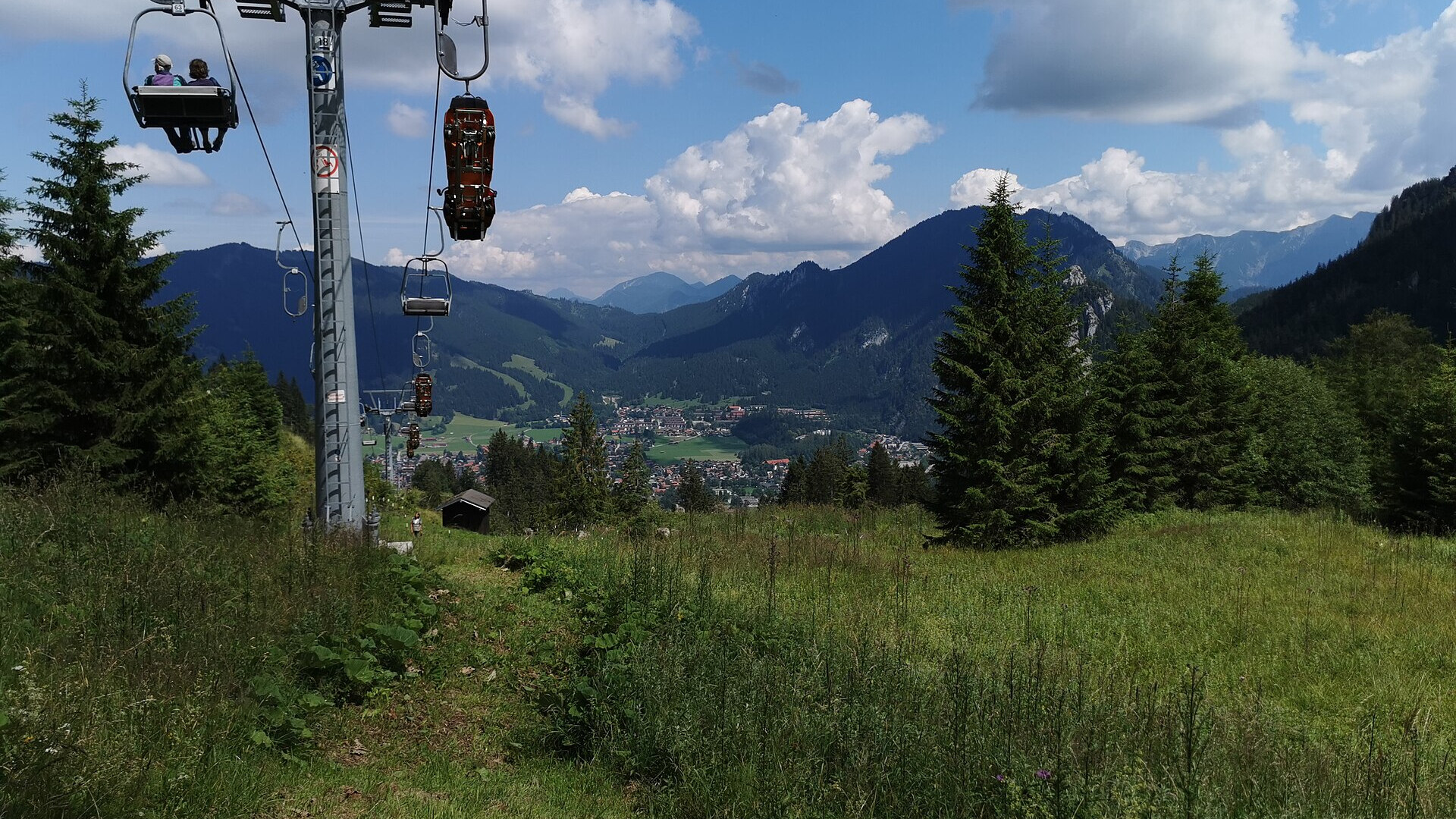
The Kolbensesselbahn chairlift above Oberammergau, summer 2020. Photo: Mateus2019 via Wikimedia Commons, CC BY 3.0 DE
The Kolbensattel above Oberammergau lost a little more than €1 million in its last three winters, its operators say. Winter 2026/27 is the first in 15 years without groomed pistes or snowmaking there. The chairlift keeps running, and the slopes become free terrain for ski tourers when natural snow allows.
In short
- The operator AktivArena am Kolben ends organised skiing, sledging and snowmaking after 15 winters, from 2011/12 to 2025/26.
- Losses in the last three winters add up to a little more than €1 million, according to the operators.
- The area lies between about 850 m and 1,270 m, where more precipitation now falls as rain.
- The chairlift, the Kolbensattelhütte and the Alpine Coaster stay open in winter.
- With enough natural snow, ski tourers may use the slopes at their own risk.
What changes at the Kolbensattel
The operators explained the decision in a letter to all households in summer 2026, signed by managing partner Klement Fend. From this winter, the Kolbensattel is a "freier Skiraum", a free ski area open to all users. The German news agency dpa took up the story on Monday 26 October 2026, in a report carried by the Abendzeitung München.
| Item | Winter 2026/27 |
|---|---|
| Groomed pistes | none |
| Snowmaking | stopped |
| Sledge run | closed |
| Kolbensesselbahn chairlift | open |
| Alpine Coaster | open, converted for winter use |
| Kolbensattelhütte | open |
| Wank T-bars at the bottom | separate operator, may run if snow allows |
The small Wank lifts at the foot of the slope belong to another operator. They can keep taking snowmaking water from the Kolbensattel pump station, the letter says.
Why the numbers no longer work
The operators took over the lifts from the municipality in 2011. The deal obliged them to keep the winter operation running for 15 years. That obligation ends with this winter.
According to the letter, every winter since 2019/20 has run at a loss. The operators list four causes:
- Temperature: fewer hours below zero in which snow guns can work, so more snow must be made in less time.
- Energy: snowmaking energy costs rose by about 160 % after the start of the war in Ukraine, to €80,000–100,000 per winter.
- Water: the snow guns draw from the river Ammer, and only down to its mean low-water flow.
- Staff: T-bars, rope tows, the sledge run, grooming and snowmaking all need extra people in winter.
"In our winter catchment area south of Munich and Augsburg, there is no longer any winter in the old sense," the letter says (translated from German).
Snowmaking did not save it
The operators invested about €600,000 in snowmaking in 2016. After a very poor winter in 2023/24, they stopped skiing down to the valley and offered a snowmade sledge run instead. That did not help: the deficit stayed at about €360,000 in each of the last two winters, the letter says.
The schneehoehen.de report describes the new model in the operators' words: ski tourers and other winter visitors use the terrain on their own responsibility. The company plans to invest in its summer business, including a solar plant of about 1 MWp that should run from summer 2027.

The T-bar valley station at the Kolbensattel, summer 2020. Photo: Mateus2019 via Wikimedia Commons, CC BY 3.0 DE
Other low ski areas this autumn
The Kolbensattel is not the only small area that changes its model before winter 2026/27. In Bavaria, the Jenner above Berchtesgaden stopped classic ski operation one season earlier, t-online reported.
| Area | Altitude | Status, as of 28 October 2026 |
|---|---|---|
| Kolbensattel, Bavaria | 850–1,270 m | no grooming, no snowmaking, free terrain |
| Jenner, Bavaria | – | no classic ski operation since 2025/26 |
| Les Rousses, French Jura | – | operator in court protection since October 2026 |
| La Dôle, Swiss Jura | top about 1,678 m | deal reached, pistes cut from 34 to 28 km |
| Saint-Colomban-des-Villards, Savoie | 1,100 m | reopens on 9 December 2026 |
In the French Jura, the operator Sogestar asked for a "procédure de sauvegarde", a court-supervised protection from creditors, on Monday 12 October 2026. "The commercial risk linked to snow cover can no longer be carried by the operator alone," its statement said, as quoted by ICI (translated from French).
Sogestar also runs the Swiss side at La Dôle. According to the Swiss paper La Côte, as reported by skiinformatie.nl, it agreed new terms with the lift owner Télé-Dôle on Wednesday 21 October. In Savoie, Saint-Colomban-des-Villards reopens with its link to Les Sybelles restored, France 3 reported. Its free-skiing winter had cost the municipality €250,000.
What this means for your skis
Without grooming, the Kolbensattel becomes a short tour above Oberammergau, but only after real snowfall. At 850 to 1,270 m, that can mean few days per winter. Nobody prepares or secures the slope, so you ski it at your own risk.
For low tours like this, a light touring ski of about 85 to 95 mm underfoot is the usual choice. Compare the Atomic Backland 88, the Dynafit Blacklight 88 and the Elan Ripstick Tour 94 on the makers' figures, or let Pick-a-Ski rank the catalog for your terrain and level.